UNESCO World Heritage SiteUNESCO World Heritage Site
Jantar Mantar
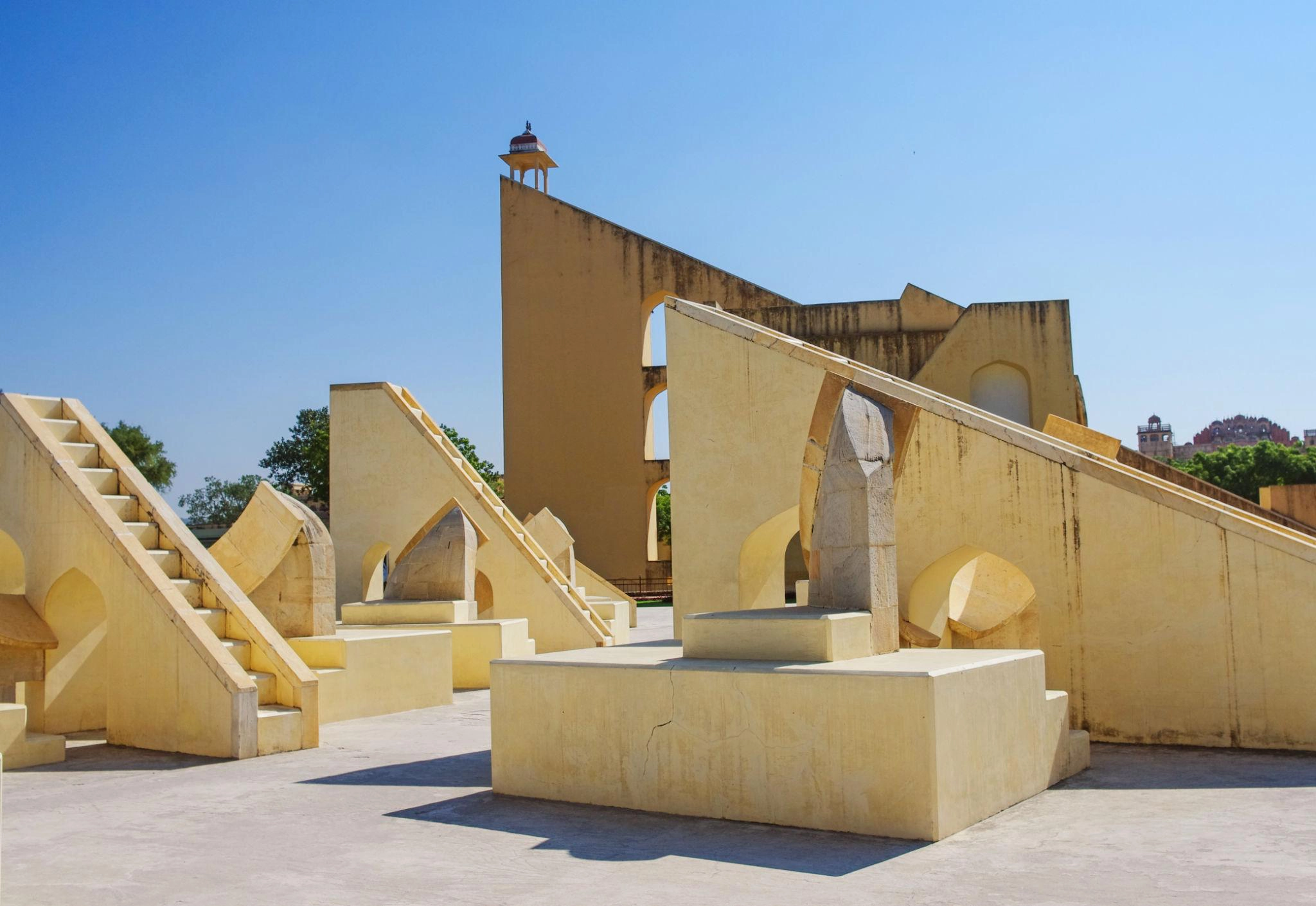
A UNESCO World Heritage site, Jantar Mantar is an outdoor astronomical observatory built in 1734 housing 19 large-scale stone instruments.
Overview
Constructed by the astronomer-king Maharaja Sawai Jai Singh II, Jantar Mantar in Jaipur is the largest and best-preserved of five astronomical observatories built in Northern India during the early 18th century.
The site houses 19 architectural-scale masonry instruments designed to measure time, predict eclipses, track star positions, and determine planetary declination using the naked eye.
Key Highlights to See
Vrihat Samrat YantraThe world's largest stone sundial, standing 27 meters tall, capable of measuring local time to an accuracy of two seconds.
Jai Prakash YantraHemispherical bowl instruments designed to map celestial positions by observing inverted shadows.
Misra YantraA composite tool designed to indicate local noon in various cities around the world.
Visitor Rules & Essential Tips
- Optimal Visit Time: Visit around noon when the sun shines directly overhead for clear, readable shadow lines on the instruments.
- Sun Protection: The observatory is entirely open-air with limited shade; carry a hat, sunglasses, and water.