
Tomb of I'timad-ud-Daulah (Baby Taj): Visitor Guide & Tickets
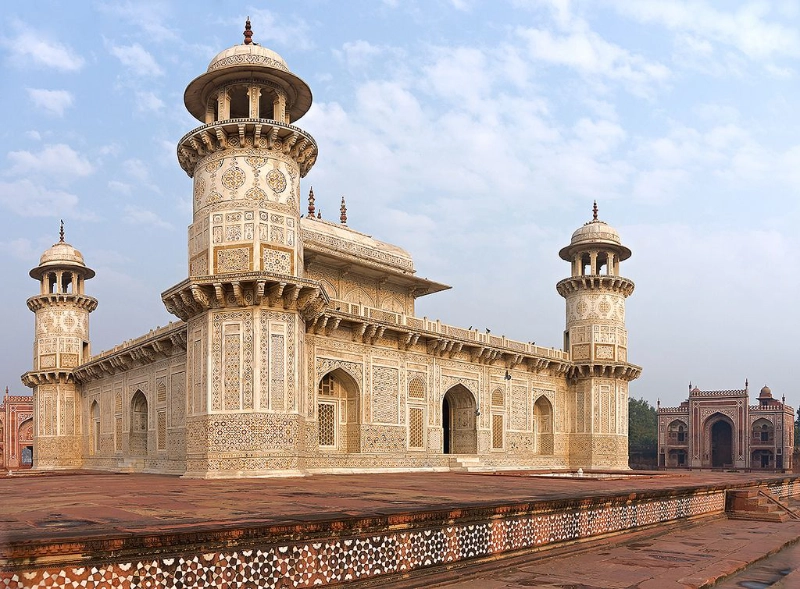
Often called the "Baby Taj", this exquisite tomb is regarded as a draft of the Taj Mahal and was the first Mughal structure built entirely from white marble.
Overview
Commissioned between 1622 and 1628 by Empress Nur Jahan for her father, Mirza Ghiyas Beg (who held the title I'timad-ud-Daulah), this mausoleum marks a crucial transition in Mughal architecture from heavy red sandstone to delicate white marble.
Set within a walled charbagh garden on the eastern bank of the Yamuna River, the structure features delicate lattice screens (jalis), stone inlay work, and corner minarets that presaged the design of the Taj Mahal.
Key Highlights to See
Visitor Rules & Essential Tips
- Peaceful Atmosphere: Visit during afternoon hours for a quiet experience with significantly smaller crowds than the Taj Mahal.
- Close-up Photography: Bring a camera equipped for macro shots to capture the fine stone inlay work on the walls.
- Combine Route: Pair your visit with Mehtab Bagh, as both sit along the eastern side of the Yamuna River.
Frequently Asked Questions
Is it worth visiting compared to the Taj Mahal?
Yes, it offers a closer look at delicate Mughal stone craftsmanship in a tranquil setting free from major crowds.
Why is it called the Baby Taj?
It is called the Baby Taj because its white marble construction and detailed pietre dura inlay inspired the later design of the Taj Mahal.
Who built the Tomb of I'timad-ud-Daulah?
The tomb was commissioned by Empress Nur Jahan, wife of Mughal Emperor Jahangir, for her father.