Fatehpur Sikri – Akbar’s Royal Ghost City
A remarkably preserved 16th-century red sandstone capital built by Emperor Akbar, later abandoned due to water shortages.
Overview
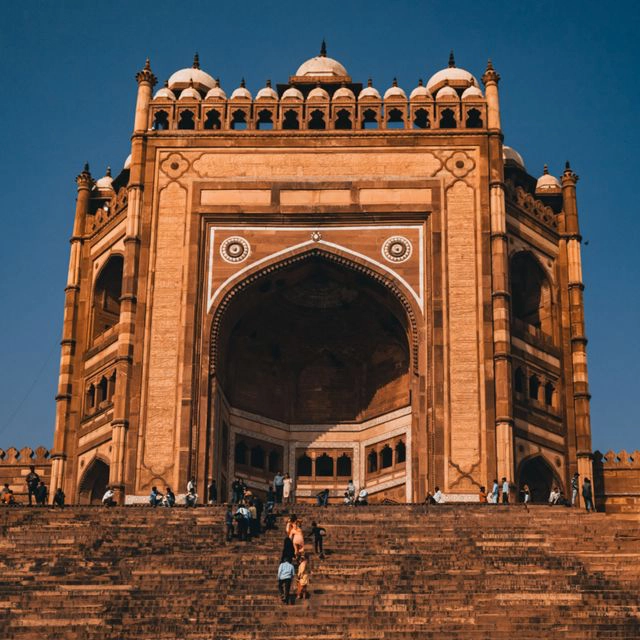
The architecture of Fatehpur Sikri is particularly fascinating because of its harmonious blend of Islamic, Persian, Hindu, and regional Indian architectural traditions. Rather than following a single architectural style, the buildings display a creative combination of decorative carvings, geometric patterns, arches, domes, brackets, columns, and finely detailed stonework. The extensive use of red sandstone gives the entire complex a distinctive appearance and creates a striking sense of unity throughout the historic city.
Visitors can explore remarkable structures within Fatehpur Sikri, including the Buland Darwaza, Jama Masjid, Panch Mahal, Diwan-i-Khas, Jodha Bai's Palace, and Tomb of Salim Chishti. Each monument has its own architectural character, from the monumental scale of Buland Darwaza to the delicate marble work of Salim Chishti's tomb. The carefully planned courtyards and interconnected buildings allow tourists to appreciate how royal, administrative, religious, and residential spaces were brought together within the Mughal city.
For a visitor, Fatehpur Sikri offers an immersive journey into the architectural world of the Mughal era. The combination of monumental gateways, finely carved sandstone, elegant courtyards, and centuries-old buildings creates a powerful sense of history as you walk through the complex. Recognized as a UNESCO World Heritage Site, Fatehpur Sikri stands as an exceptional example of Mughal architectural planning and craftsmanship, offering travelers a memorable opportunity to experience the grandeur and artistic sophistication of Emperor Akbar's historic city.
Key Highlights to See
Visitor Rules & Essential Tips
- Shoe Covers Required: Shoes must be removed or covered when entering the Jama Masjid and Salim Chishti shrine area.
- Shuttle Bus Service: Private vehicles park at the base hill; official green shuttle buses take visitors up to the main monument gates.
Frequently Asked Questions
How far is Fatehpur Sikri from Agra?
It is about a 45-to-60-minute drive (37 km) west of central Agra along the Jaipur highway.
Do I need a tour guide here?
Yes, hiring an official guide at the ticket counter is highly recommended due to the vast size and rich history of the complex.